
2026 Penn FTD Center Summer Interns and Trainees
The Penn FTD Center is currently hosting a group of interns and trainees for the summer of 2026. Some individuals participated in the Summer Training in Aging Research (STAR) program while others shadowed Penn FTD Center Co-Directors and Postdoctoral Fellows to gain experience working in an academic research lab. The summer interns and trainees shared their backgrounds and reflected on their experiences with the Penn FTD Center. Read below to learn more about the interns and trainees and how they plan to utilize this opportunity in the future.
Chris Andraos

Chris Andraos is a rising senior at Villanova University. Chris is working in Dr. Allison Snyder's lab to examine the correlation between TDP-43 and Annexin A11 co-aggregation with FTLD. "My work will include tissue culture, minipreps of plasmids that allow us to over-express different Annexin A11 variants, and the designing and prepping of patient-related variants in order to compare phenotypic differences to wild-type Annexin A11." Chris is excited to learn from a leading contributor in the field. "I hope to gain a better understanding of the field, especially the complexities between the clinical presentations and the underlying pathologies of the FTD variants and other neurodegenerative diseases. I look forward to learning directly from Dr. Snyder to understand how I can become an exceptional physician like her and gain valuable lab skills from my time in the lab."

Natalie Barry
Under the supervision of Penn FTD Center Co-Director Lauren Massimo, PhD, Natalie Barry is hoping to "get exposure to how research is streamlined from the neuropath lab to clinical trials as well as clinical care of patients." Natalie is in her final year of medical school at Trinity College in Dublin, Ireland. Prior to Trinity College, Natalie received a Masters in Biomedical Engineering from the University of Paris where she completed a Masters thesis in artificial intelligence and incident stroke prediction at the Erasmus Medical Center in Rotterdam, Netherlands. "I am interested in getting a global understanding of what biomarkers are of importance currently and what are the main pharmacological as well as non-pharmacological goals of clinical care in FTD patients."
Sonia Sirisi Dolcet

Sonia is visiting the Penn FTD Center as part of a collaboration with Dr. David Irwin to study neuropathological distribution and lesion patterns detected by a novel antibody that Sonia developed in her own laboratory, using postmortem brain tissue from well-characterized neurodegenerative disease cohorts. Sonia is a Postdoctoral Researcher at the Memory Unit of Hospital de Sant Pau in Barcelona, Spain with a background in Biochemistry. Her research focuses on neuropathology and synaptic dysfunction in neurodegenerative diseases, particularly Alzheimer’s disease and related dementias. "I hope to gain expertise in digital neuropathology approaches and advanced tissue analysis methods, while also learning new ways of working and strengthening collaborations with researchers at Penn."
Kent Foo
Under the supervision of Postdoctoral Fellow Noah Schweitzer, PhD and Penn FTD Center Co-Director Corey McMillan, PhD, Kent is assisting with the study of thalamic decay and whether it can be used to predict ALS/FTD prior to diagnosis. Kent hopes to use the skills he learns this summer to better understand the kind of work that takes place at a center or a lab. The skills Kent learns this summer will further assist him as he enters his junior year at Haverford School.
Allisa George
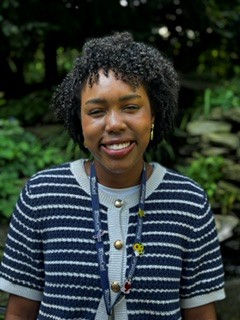
As a Summer Training in Aging Research (STAR) participant, Allisa is studying the association between proteinopathies and the clinical syndromes of FTD to investigate whether there is a pattern between tau and TDP-43 using neuroimaging and histopathological methods. "I hope to learn as much as possible about the different types of dementia and how clinical, neuroimaging, and neuropathological findings are integrated to better understand neurodegenerative disease while learning how to become a physician-scientist like Dr. Irwin. Having watched my grandmother live with Alzheimer’s disease, I have seen how these conditions affect not only patients but also the families who care for them, which motivates me to strengthen my research skills and learn how discoveries can be translated into better diagnosis and treatment. Ultimately, I hope this opportunity will prepare me to contribute to improving the lives of older adults living with neurodegenerative diseases while growing as a scientist at one of the nation’s leading ADRC centers!"
Jiaxin Ma
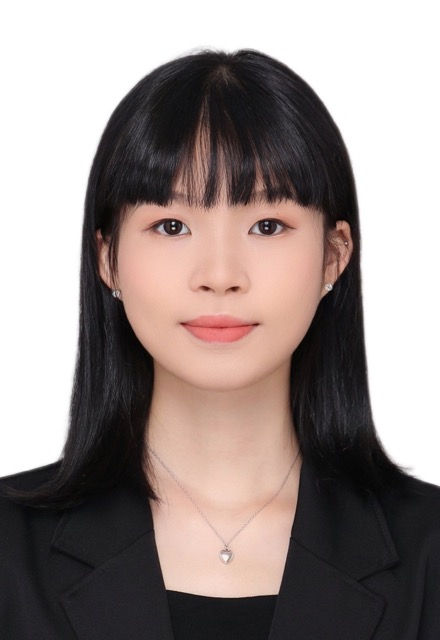
Jiaxin is a rising senior at Barnard College of Columbia University majoring in Neuroscience & Behavior. "My research interests focus on neurodegenerative diseases and the biological mechanisms underlying brain disorders. Prior to joining Penn this summer, I conducted neuroscience research at Columbia University and the University of Rochester, where I gained experience in neurobiology, histology, and translational neuroscience research." Jiaxin is working in Dr. David Irwin's Neuropathology Lab analyzing digitized human brain tissue from patients with Parkinson’s disease and Lewy body dementia, with a focus on neuroinflammation, α-synuclein pathology, and hippocampal vulnerability using digital pathology tools. "Through this opportunity, I hope to gain a deeper understanding of the pathological mechanisms underlying neurodegenerative diseases and learn how neuropathological data can be translated into meaningful clinical insights. I am also excited to learn from researchers and clinicians working at the intersection of neuroscience, pathology, and patient care as I prepare to pursue a PhD in neuroscience."

Ella Poppinga
Studying under Penn FTD Center Genetic Counselor Laynie Dratch, ScM, CGC, Ella is "hoping to learn more about what the role of a genetic counselor is as well how the role can differ among clinics." Ella is a rising senior at Colgate University as a Neuroscience major. "I have gained so much exposure and experience with a variety clinicians and genetic counselors so far that has been so helpful in obtaining a more holistic understanding of what day to day life can look like. I have also gotten the opportunity to gain experience in research with both survey creating and data cleaning and analysis."

Sienna Valenti
Sienna is a rising junior at Penn State University majoring in immunology and infectious diseases. Under the mentorship of Penn FTD Center Postdoctoral Fellow Nadia Dehghani, PhD, Sienna is analyzing pedigrees and categorizing familial variations in high-risk onset of ALS and FTD caused by C9orf72, with a focus on identifying genetic causes of these variations. "I hope to gain a better understanding of disease and apply what I learn to my future research on infectious diseases. I am also optimistic that this opportunity will help me become more well-rounded in understanding all forms of familial diseases and their onset, so that my care as a future physician can be the best it can be."


